
InsightsChartering · 6 min
How vessel sourcing works for dry bulk cargo
From cargo brief to fixture: the questions that decide whether a ship is truly suitable.
Vessel sourcing is often described as “finding a ship”. In practice it is the disciplined work of matching a defined cargo to tonnage that can lift it safely, legally and economically, at the right place and time. The ship name is the last thing to appear, not the first.
1. The cargo brief comes first
Owners and operators respond to clear, complete enquiries. A credible brief states the commodity and its characteristics, quantity with tolerance (for example “50,000 mt 10% more or less in charterer’s option”), load and discharge ports, the laycan (the window in which the vessel must present for loading), loading and discharge rates, and the intended contract basis. Missing information does not save time; it produces indications that cannot be executed.
2. Size classes are a language, not a guess
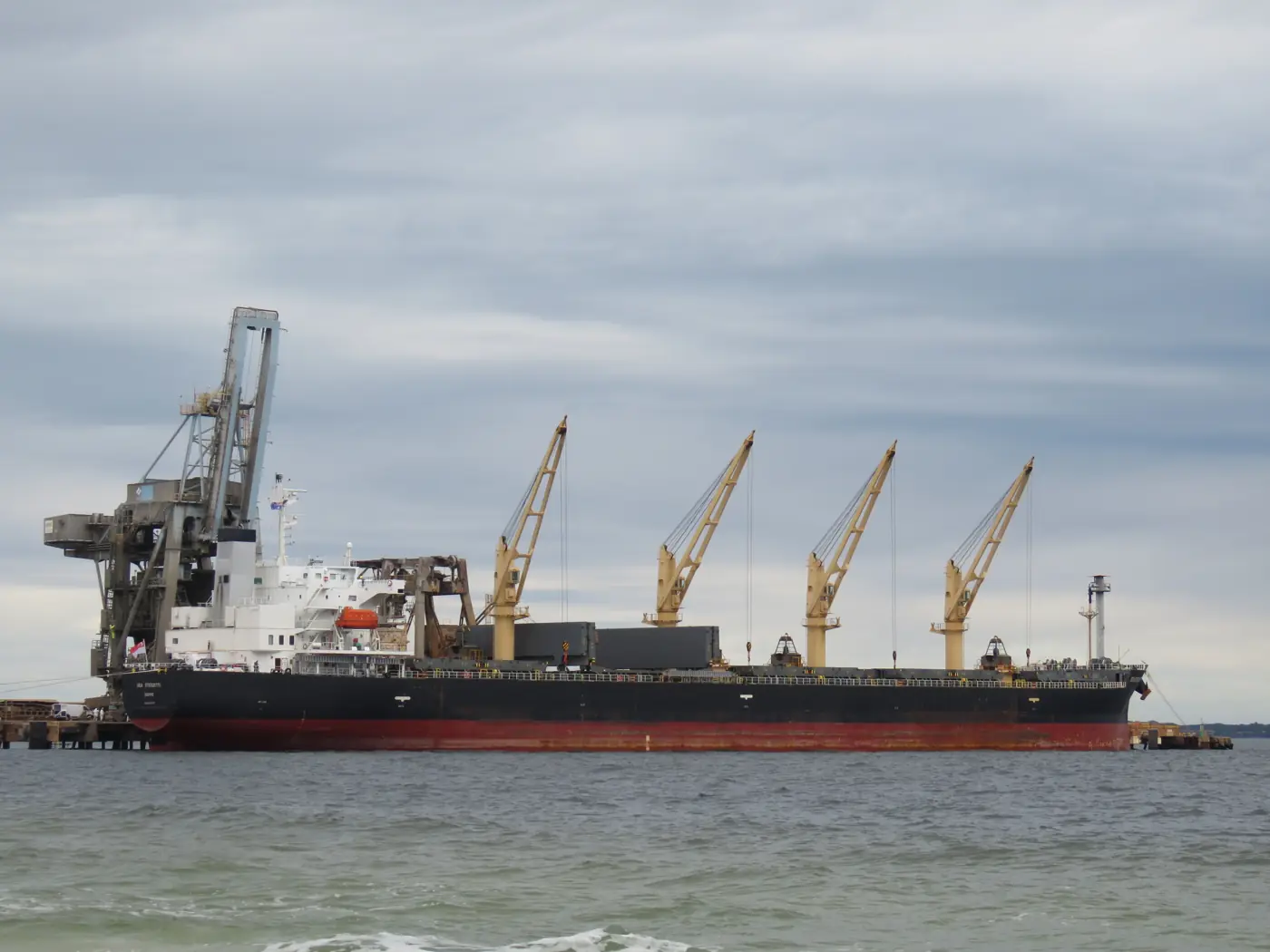
The dry bulk market is organised in size classes. The Baltic Exchange, whose assessments are a widely used reference, describes its standard vessels as a Capesize of 182,000 mt deadweight, a Panamax of 82,500 mt, a Supramax of 63,500 mt with four 30-tonne cranes and grabs, and a Handysize of 38,200 mt with its own cranes. These descriptions are useful anchors: they show how deadweight, draft, beam, cargo-gear and cubic capacity travel together.
Parcel size, port restrictions and cargo gear usually narrow the field more than freight level does.
3. Constraints narrow the field
Every port and berth has limits: maximum length overall (LOA), beam, air draft, draft at the berth and seasonal draft in the approaches. A port without shore cranes requires a geared vessel. Stowage factor matters as much as weight: a light cargo can fill the holds before the ship reaches its deadweight. Sourcing therefore starts by excluding vessels that cannot work, before comparing those that can.
4. Sounding the market
With a clean brief, the enquiry is circulated to owners and operators with suitable open positions. Responses arrive as indications or firm offers with “subjects” (conditions still to be lifted, such as charterer’s approval or receivers’ acceptance). Each response is checked against the vessel particulars, the position and the commercial terms, not only the headline freight.
5. From recap to fixture
Once main terms are agreed, they are summarised in a recap, typically referencing a standard form. For voyage business in dry bulk, BIMCO describes GENCON as the most widely used voyage charter party in the sector. Because many fixtures are concluded on a recap plus amendments, precise wording on laytime and other terms is essential; BIMCO publishes its Laytime Definitions for Charter Parties 2013 for exactly this reason.
What a good adviser adds
Independent advice adds structure: a complete brief, realistic expectations about tonnage and timing, a like-for-like comparison of offers and clear communication of every open point before anyone commits.
Schiffssuche wird oft als «ein Schiff finden» beschrieben. In der Praxis ist es die disziplinierte Arbeit, eine definierte Ladung mit Tonnage zusammenzubringen, die sie sicher, rechtskonform und wirtschaftlich zur richtigen Zeit am richtigen Ort laden kann. Der Schiffsname erscheint zuletzt, nicht zuerst.
1. Zuerst das Ladungsbriefing
Reeder und Operatoren reagieren auf klare, vollständige Anfragen. Ein belastbares Briefing nennt Ware und Eigenschaften, Menge mit Toleranz (etwa «50’000 mt 10 % mehr oder weniger nach Wahl des Befrachters»), Lade- und Löschhafen, die Laycan (das Zeitfenster, in dem das Schiff ladebereit sein muss), Lade- und Löschraten sowie die vorgesehene Vertragsbasis. Fehlende Angaben sparen keine Zeit, sie führen zu Indikationen, die sich nicht umsetzen lassen.
2. Grössenklassen sind eine Sprache
Der Massengutmarkt ist in Grössenklassen organisiert. Die Baltic Exchange, deren Bewertungen als Referenz breit genutzt werden, beschreibt ihre Standardschiffe als Capesize mit 182’000 mt Tragfähigkeit, Panamax mit 82’500 mt, Supramax mit 63’500 mt und vier 30-Tonnen-Kranen mit Greifern sowie Handysize mit 38’200 mt und eigenem Ladegeschirr. Diese Beschreibungen zeigen, wie Tragfähigkeit, Tiefgang, Breite, Ladegeschirr und Laderaum zusammenhängen.
Partiegrösse, Hafenrestriktionen und Ladegeschirr schränken die Auswahl meist stärker ein als das Frachtniveau.
3. Rahmenbedingungen grenzen ein
Jeder Hafen und jeder Liegeplatz hat Grenzen: maximale Länge (LOA), Breite, Durchfahrtshöhe, Tiefgang am Liegeplatz und saisonaler Tiefgang in der Zufahrt. Ein Hafen ohne Landkrane verlangt ein Schiff mit eigenem Geschirr. Der Staufaktor zählt so viel wie das Gewicht: Leichte Ladung füllt die Laderäume, bevor die Tragfähigkeit erreicht ist. Schiffssuche beginnt deshalb mit dem Ausschluss ungeeigneter Schiffe.
4. Den Markt sondieren
Mit einem sauberen Briefing geht die Anfrage an Reeder und Operatoren mit passenden offenen Positionen. Antworten kommen als Indikationen oder feste Offerten mit «Subjects», also noch offenen Bedingungen wie der Zustimmung des Befrachters oder der Empfänger. Jede Antwort wird gegen Schiffsdaten, Position und kommerzielle Konditionen geprüft, nicht nur gegen die Frachtrate.
5. Vom Recap zum Abschluss
Sind die Hauptkonditionen vereinbart, werden sie in einem Recap zusammengefasst, meist mit Verweis auf ein Standardformular. Für Reisecharter im Massengut bezeichnet BIMCO GENCON als die weltweit meistgenutzte Reisecharter-Partie der Branche. Da viele Abschlüsse auf Basis eines Recaps samt Änderungen erfolgen, ist präzise Formulierung zentral; BIMCO veröffentlicht dafür die Laytime Definitions for Charter Parties 2013.
Was gute Beratung beiträgt
Unabhängige Beratung schafft Struktur: ein vollständiges Briefing, realistische Erwartungen an Tonnage und Timing, ein vergleichbarer Offertenvergleich und klare Kommunikation aller offenen Punkte, bevor sich jemand verpflichtet.
Sources
- Baltic Exchange – Dry services & Baltic Dry Index
- BIMCO – GENCON 2022 voyage charter party
- BIMCO – Laytime Definitions for Charter Parties 2013
General information, not legal advice. The wording of the specific contract always prevails.
More insights
 Contracts · 5 minVoyage vs time charter, explainedWho carries which cost and which risk, and why the choice of form matters.Read article
 Contracts · 5 minLaytime and demurrage: the basicsHow port time is allowed, counted and paid for under a voyage charter.Read articleMarket · 4 minWhy Switzerland sits at the centre of commodity tradingA landlocked country without raw materials, and one of the most important locations for the global commodity industry.Read article